
Stop Deforestation
As the world seeks to slow the pace of climate change, preserve wildlife, and support billions of people continues, sacrificing the long term benefits of standing trees for short term gain.
Forests still cover about 30 percent of the world's land area, but they are disappearing at an alarming rate. Between 1990 and 2016, the world lost 502,000 square miles (1.3 million square kilometres) of forest, an area larger than South Africa.
Since humans started cutting down forests, 46 percent of trees have been felled, according to a 2015 study in the journal Nature. About 17 percent of the Amazonian rainforest has been destroyed over the past 50 years, and losses recently have been on the rise.
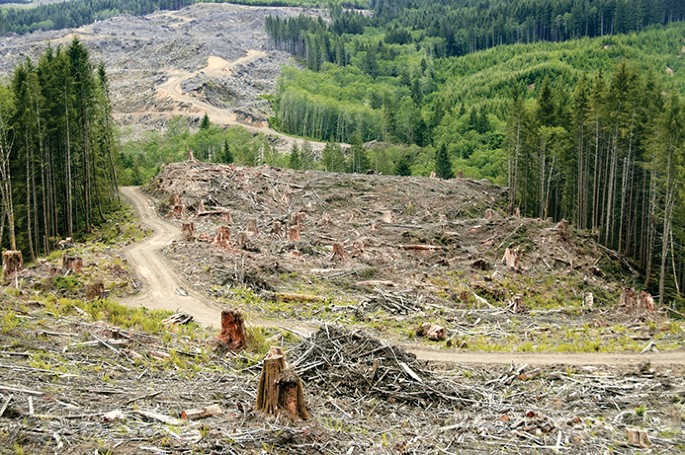
We need trees for a variety of reasons, not least of which is that they absorb not only the carbon dioxide that we exhale, but also the heat-trapping greenhouse gases that human activities emit. As those gases enter the atmosphere, global warming increases, trend scientists now prefer to call climate change. Tropical tree cover alone can provide 23 percent of the climate mitigation needed over the next decade to meet goals set in the Paris Agreement in 2015.
Deforestation has many negative effects on the environment. The most dramatic impact is a loss of habitat for millions of species. Seventy percent of Earth's land animals and plants live in forests, and many cannot survive the deforestation that destroys their homes.
Effects of Deforestation
Soil erosion destruction.
Soils (and the nutrients in them) are exposed to the sun's heat. Soil moisture is dried up, nutrients evaporate and bacteria that help break down organic matter are affected. Eventually, rain washes down the soil surfaces and erosion takes place. Soils never get their full potential back.
Water Cycle
When forests are destroyed, the atmosphere, water bodies and the water table are all affected. Trees absorb and retain water in their roots. A large part of the water that circulates in the ecosystem of rainforests remains inside the plants. Some of this moisture is transpired into the atmosphere. When this process is broken, the atmosphere and water bodies begin to dry out. The watershed potential is compromised and less water will run through the rivers. Smaller lakes and streams that take water from these larger water bodies dry up.
Loss of Biodiversity
Many wonderful species of plants and animals have been lost, and many others remain endangered. More than 80% of the world's species remain in the Tropical Rainforest. It is estimated that about 50 to 100 species of animals are being lost each day as a result of destruction of their habitats, and that is a tragedy. Many beautiful creatures, both plants and animals have vanished from the face of the earth.
Climate Change
Plants absorb Carbon Dioxide CO2 (a greenhouse gas) from the atmosphere and uses it to produce food (carbohydrates, fats, and proteins that make up trees). In return, it gives off Oxygen. Destroying the forests mean CO2 will remain in the atmosphere and in addition, destroyed vegetation will give off more CO2 stored in them as they decompose. This will alter the climate of that region. Cool climates may get a lot hotter and hot places may get a lot cooler
Deforestation
also drives climate change. Forest soils are moist, but without protection from sun-blocking tree cover they quickly dry out. Trees also help perpetuate the water cycle by returning water vapor back into the atmosphere. Without trees to fill these roles, many former forest lands can quickly become barren deserts.
Removing trees deprives the forest of portions of its canopy, which blocks the sun's rays during the day and holds in heat at night. This disruption leads to more extreme temperatures swings that can be harmful to plants and animals.
Trees also play a critical role in absorbing the greenhouse gases that fuel global warming. Fewer forests means larger amounts of greenhouse gases entering the atmosphere-and increased speed and severity of global warming.
The quickest solution to deforestation would be to simply stop cutting down trees. Though deforestation rates have slowed a bit in recent years, financial realities make this unlikely to occur.
A more workable solution is to carefully manage forest resources by eliminating clear-cutting to make sure that forest environments remain intact. The cutting that does occur should be balanced by the planting of enough young trees to replace the older ones felled in any given forest. The number of new tree plantations is growing each year, but their total still equals a tiny fraction of the Earth's forested land.
What can we do to help preserve our forests?
Sometimes, we are overwhelmed by the extent of damage humans have caused, and we are not sure if an individual can make any impact.
Yes you can, there are millions of people just like you, who are learning about the issue and taking little steps to help. Additionally, many governments, organizations and societies are making great strides in helping reducing deforestation, and encouraging forest plantations.
But there is still a lot to do.
Due to the extent and nature of forest destruction, efforts to stop deforestation and preserve them are best achieved at government and organization levels. This means that laws, rules and regulations from countries can help to enforce the preservation of forests. Laws on farming, timber and wood, as well as land use must be encouraged and enforced.
Here are a few things you can also do to help.
Make a conscious effort to share information with others (friends at school and family members) on deforestation and its' effects. Some of your friends may laugh at you and say it is silly to think that you can solve problems like this. But that is OK, things work better when responsible people don't give up. Stand up for what you believe in.
Join organizations, forest-preservation societies and pressure groups that aim to help preserve the rest of our natural resources. When more people work together, the impact is greater.
Reduce the use of artificial items, recycle more and re-use items. Wood, paper, plastics and many other things we use everyday at home can be linked to natural resources being destroyed. This means that if we all recycle more, there will be less dependence on the environment (and trees). It also means that companies and governments will import less raw-materials from the forest regions of the world.
There is a fun way to remember the most important points in forest preservation called TREES which means.
Teach others about the importance of the environment and how they can help save rainforests
Restore damaged ecosystems by planting trees on land where forests have been cut
Encourage people to live in a way that doesn't hurt the environment
Establish parks to protect rainforests and wildlife
Support companies that operate in ways that minimize damage to the environment
In Conclution
Stopping deforestation is a complex challenge that requires a multi-faceted approach involving governments, businesses, NGOs, and individuals. It's essential to balance the needs of economic development with environmental sustainability to ensure a healthy and thriving planet for future generations.
Join us at Green Planet Advertiser
Let's pave the way for a sustainable future together. Whether you're a vendor looking to expand your global reach or a consumer seeking the latest renewable energy innovations, our platform is your gateway to a greener, cleaner, and more sustainable world. Together, we'll create a brighter tomorrow powered by renewable energy.