
One man’s Journey from the abyss
Introduction
There comes a point in life when the familiar rhythm of the 9-to-5 fades, and retirement opens the door to a new chapter—one filled with freedom, discovery, and long-awaited rest. For many, it’s a time to explore the world, to reconnect with passions left dormant, and to savour the rewards of decades of hard work.
My wife and I embraced the moment with open hearts, eager to experience life beyond routine and rediscover the joy of simply living.
Yet what unfolded for me was far more than a change in lifestyle—it was a profound, life-altering transformation. An unexpected turn in my journey shattered the sense of certainty I once held and reshaped not only my future, but the very core of who I am. I emerged from the experience irrevocably changed.
What began as a peaceful transition soon unravelled into something deeper—a descent not into a foreign land, but into the very depths of my own being? The comforts of structure and predictability gave way to physical strain, emotional upheaval, and an overwhelming sense of vulnerability. My identity, once rooted in stability, was tested in ways I could never have foreseen.
This is not a simple story of retirement or travel. It is a story of survival—of confronting fear, fragility, and the shadows that live within us all. It is about the silent battles that unfold behind closed doors, and the quiet resilience required to keep moving forward when everything seems to fall apart.
But it is also a story of renewal. Out of the darkness came a kind of awakening—painful, raw, and ultimately transformative. Though I was brought to my knees, I was not defeated. And in that humbling process, I discovered a new way of seeing the world: with deeper gratitude, greater clarity, and a renewed commitment to live with intention.
This is the story of my journey from the abyss—and the enduring lessons it etched into my soul.
Chapter 1: Arrival in Thailand
It was a typical day in Thailand. We'd been there for three days now, and the heat was intense. The air was thick with humidity, but it felt good. We had quickly adjusted to the pace of life here. It was Friday, and as luck would have it, there was an open market in town. The streets were full of stalls selling everything from fresh fruit to handmade goods.
The noise, the colours, and the smells—all of it was overwhelming, yet exciting. In the market, there was a café that had the best-iced tea I had ever tasted. A must-have for anyone visiting. I made my way over to the café, feeling the excitement of the day build. After ordering my iced tea, I took a stroll around the market, soaking in the sights and sounds. It was the kind of carefree day that makes you forget about everything else. By 5 p.m., we were heading back to the beachfront hotel, eager to catch the sunset.
There’s something magical about the sun dipping below the horizon, painting the sky with shades of orange and purple. It was the perfect end to a perfect day. But soon, things took an unexpected turn. I had decided to sit by the pool, but it didn’t feel right. I felt off, disconnected. So, I went back to the bedroom to lie down. That’s when it happened.
Chapter 2: The Moment It All Changed
As I lay down, something inside my head snapped. There was a violent pain, unlike anything I had ever experienced. It wasn’t a headache—it was something far worse. It was as though my brain itself was on fire. And then, in an instant, everything went black. I was unconscious, fighting for my life.
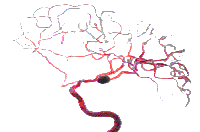
I had a type of stroke, but not the more common kind. Mine was due to an aneurysm bursting in my brain. This lead to a sudden large bleed into the space surrounding my brain, known as a subarachnoid haemorrhage. Many people who suffer such a catastrophic event die or are left with severe debilitating consequences.
I woke up, I was in Bangkok Hospital. The first thing I remember was the pain—the throbbing pressure in my head. I was disoriented, unsure of where I was or what had happened. But one thing was clear: I was in trouble. Serious trouble.
Chapter 3: A Race Against Time
The surgeons worked tirelessly to pin the blood vessel and stop the bleeding. They also fitted a tube to drain the blood clot from my head. I don’t remember much of the surgery itself, but my wife told me later that I had been semi-conscious, speaking to her in a way that made her believe I was saying my goodbyes. It was touch and go.
I had been diagnosed with a subarachnoid brain aneurysm. My condition was critical, and I needed emergency surgery right away. The doctors acted quickly. I was rushed into surgery on Friday night, Halloween night. The operation was set to take six hours.
The surgeons had told her that it was uncertain whether I would survive. The odds were against me, but somehow, I held on. My wife, terrified and unsure of what would happen, stayed by my side, waiting for any sign of hope.
Chapter 4: The Waiting Game
It was a long, painful night. My wife barely slept, staying awake as the hours ticked by. Then, at about 8:30 the next morning, she received a call. She answered, groggy but hopeful, “Rob, is that you?” “Yes, Pauline, it’s me,” I said, surprising both of us with my voice. I was still in the intensive care unit, recovering from the surgery, but I was alive. It had only been eight hours since the surgery, yet here I was, calling her. The sense of surrealism was overwhelming. I had come so close to death, yet now I was talking to her as though nothing had happened.
Chapter 5: Recovery and Gratitude
After a few weeks in intensive care, I was moved to a private room in the hospital. The room overlooked the helicopter landing spot. It was a strange sight—a place meant for emergencies, yet I found myself staring out of the window, waiting to see if a helicopter would land. But as the days passed, I realized no one else would need the helicopter. I had been given a second chance at life. Two weeks passed in that private room. My wife was my constant companion, always there by my side. The nurses came and went, checking on me regularly. I had excellent care, but the reality of what had happened was still sinking in.
When I was finally given the all clear to travel home, I felt a strange mix of relief and fear. A nurse from the insurance company came to assess my condition before the journey. She looked at me and said, “You’re the most well-looking sick person I’ve ever seen.” It was a strange compliment, but it made sense. Thanks to the incredible care I received at Bangkok Hospital, I was in much better shape than I should have been.
Chapter 6: Embracing the Scar
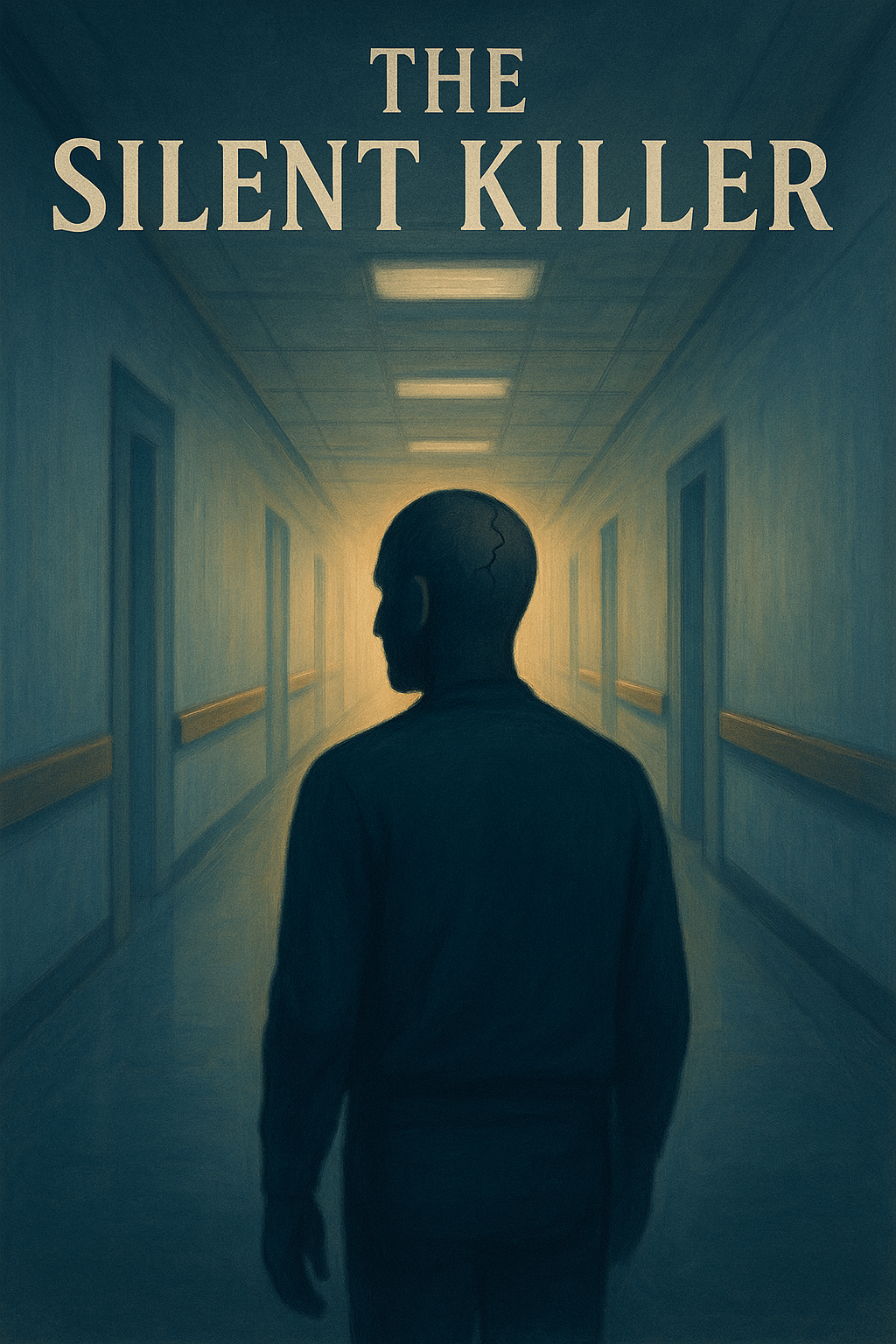
The neurosurgeon had a chat with me one final time before I left the hospital. She told me I should grow my hair to cover the scar left by the surgery. But I didn’t have any hair to grow, and even if I did, I wouldn’t have wanted to hide the scar. “I wear my scar with pride,” I told her. “I’ve beaten the silent killer. Short term memory loss is a small price to pay for my life.” It wasn’t just about the scar—it was about embracing everything I had been through and owning it. The scar was a reminder of the life I had been given, the second chance I had earned.
Chapter 7: The Long Road Home
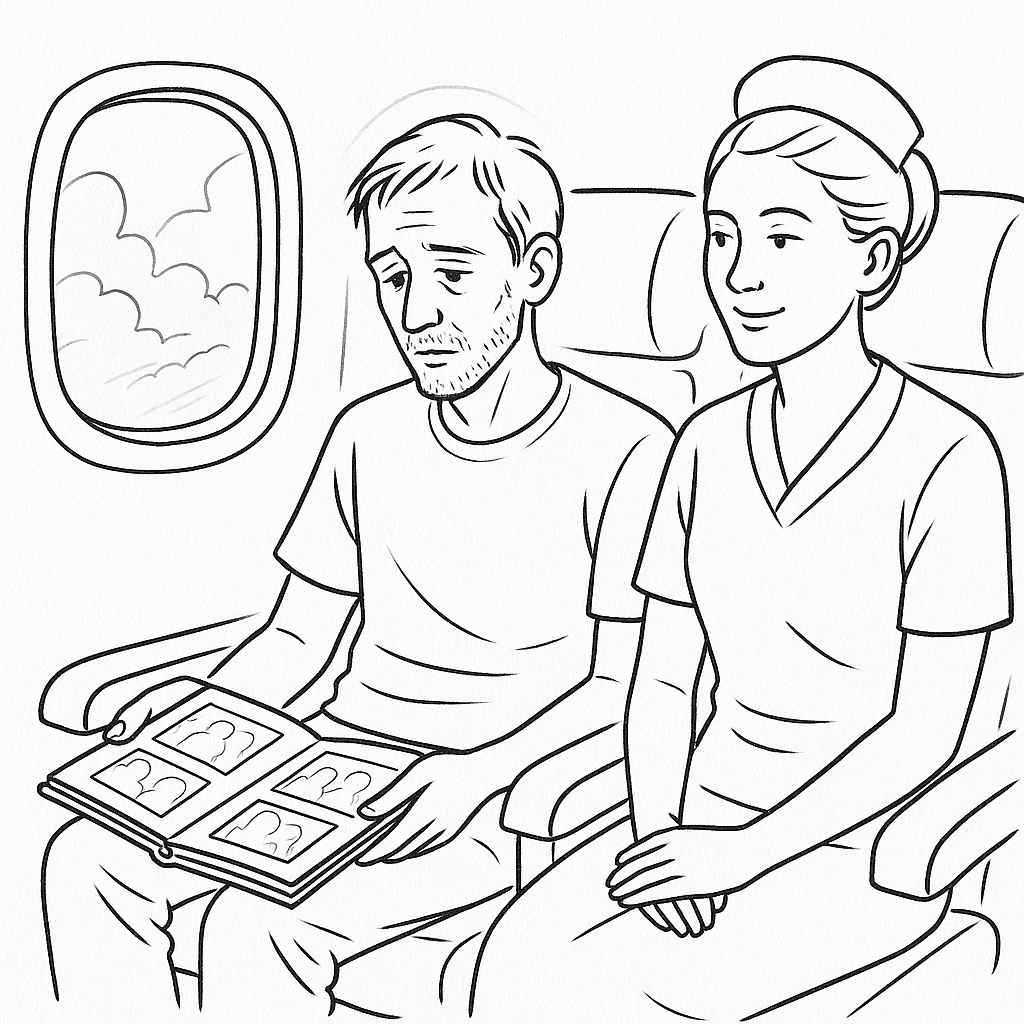
The journey home was an odd one. I had a nurse escort me, just to be safe. She kept telling me that I was doing well, but I knew it would take time before I was fully recovered. The memories of my time in Thailand were hazy, and I had no recollection of the first three weeks.
The only thing I had to hold onto were the hundreds of photos my wife had taken to document the journey. The flight was long, but somehow, I made it through. I was back home, but I knew my journey was far from over.
Chapter 8: A New Life and New Challenges
Once home, I had to retrain my brain. I could walk and talk, but everything else was a blur. It was like being a child again, learning how to do everything from scratch. I remember staring at the computer screen, unable to remember how to turn it on, let alone use it. It felt like starting over.
In the first few weeks, I struggled to do even the simplest of tasks. But I didn’t give up. I knew I had to push myself, no matter how difficult.
One day, as I browsed the Internet in a daze, I stumbled upon a game that seemed simple enough: Solitaire. It was a game I had played in the past, but back then, it was nothing more than a way to pass the time. Now, it became my lifeline. I knew I needed to start somewhere, and Solitaire was as good a place as any. Little did I know, this game would become both my obsession and my salvation?
I started playing. At first, I couldn’t remember the rules or strategies. Every move felt like a shot in the dark. But the more I played, the more it helped. My mind began to engage, to think ahead, to analyse. Slowly, the fog started to lift. Each win, each game completed, felt like a small victory. It wasn’t much, but it was progress. And for the first time in months, progress felt like hope.
Days turned into weeks, and weeks turned into months. months into years Solitaire became my ritual, my daily exercise. It wasn’t just a game anymore—it was therapy. I would sit at the computer for hours, playing game after game. My goal wasn’t to win, but to improve, to challenge myself, to break through the mental block that had held me captive for so long. The game became addictive, but not in the traditional sense. It wasn’t about winning or losing; it was about healing.
As time went on, I got better—much better. My reflexes sharpened, my decision-making improved, and my memory began to return. I played at a faster pace, started to think strategically, and began to win more often. Eventually, I reached a point where I was playing at what I would call a “grandmaster” level. The game was no longer just about completing the cards; it was about mastery, precision, and control. It was as if my brain was coming back to life, and Solitaire was the spark that ignited it.
But the most surprising part of this journey was when I hit 999 games won. I had been playing for so long that I never thought I would keep track of how many games I had played, but somewhere along the way, I started counting. 999 victories. I couldn’t help but wonder—what would happen next? Would the count reset to zero, or would it finally reach 1000? It felt like a symbolic moment, the culmination of all the work, the countless hours spent training my brain.
One night, after winning yet another game, I found myself at the threshold of 1000. I clicked on the cards, one move at a time, and the numbers climbed. It was as if my entire recovery had led to this moment. The last game was challenging, yet I was calm and focused. I knew that I had reached the end of this particular journey, that I had conquered the mental struggle that had once seemed insurmountable.
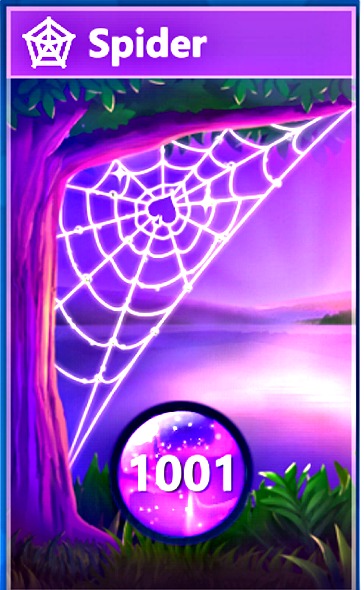
When the game ended, the final screen popped up, confirming my 1000th win. The number didn’t go back to zero, and it didn’t reset. It was a reflection of everything I had accomplished. But then, something strange happened. As I sat there, staring at the screen, I felt a sense of closure. It wasn’t just about the game or the number. It was about me—about who I had become through all of this. But then, something unexpected occurred. The game didn’t stop at 1000. It carried on. The screen displayed the number 1001.
I had won again, and for a split second, I just stared at the screen, confused. I had never considered what would happen after 1000. Was this a glitch, or was this the next level? The number 1001 didn’t reset to zero. It didn’t go back to a starting point. It simply moved forward, like a continuation of everything I had worked for, everything I had fought to reclaim. But it wasn’t just the fact that I had won the 1001st game that struck me.
The number 1001 was a palindrome—a number that reads the same forwards and backwards. In that moment, everything about my recovery seemed to come full circle. My journey, from the darkness of uncertainty to the light of clarity, was reflected in that number. It felt as if the universe had aligned, as if my battle for recovery had been mirrored by the symmetry of that simple number.
I played that 1001st game with an incredible sense of clarity. It was no longer about the game itself—it was a metaphor for everything I had endured, everything I had overcome. I wasn’t stuck at a plateau. I had reached a new chapter in my recovery.
When I won that final game, I paused for a long time, reflecting on everything I had been through. Solitaire had been my constant companion during the toughest times. It had trained my brain, it had helped me heal, and now, in a way, it had helped me close that chapter.
I didn’t feel the need to play anymore. Solitaire had done its job. My brain was back, and I could see it clearly now. My memory had returned. I could think with ease, and the fog that had once clouded my thoughts had lifted. I no longer felt like the person I was before the surgery. In fact, I don’t even remember what I was like before. But I do know this: the person I’ve become is stronger, wiser, and more resilient. The journey may not have been easy, but it has been worth every step.
The 1001st game was the final mark of a victory—not just in the game, but in my life. And with that, I knew it was time to move forward..
The journey was difficult, and at times, I wondered if I would ever be the same again. But I never lost hope. I never gave in.
Chapter 9: The Return Visit
Two years later, when I was finally able to fly again, I knew I had to return to Bangkok Hospital. I wanted to visit the ICU1 and find the neurosurgeon who had saved my life.
As we waited, for the lift, she unexpectedly walked out. I stopped her to say hello and express my heartfelt gratitude. She told me that we were the first Europeans to return to the hospital after surgery.

We then visited the ICU to meet the nurses who had played a crucial role in my recovery. The doctor and I thanked them for their care, and they showed me the room where I had fought for my life. The department was incredibly busy, filled with patients in critical condition, so we kept our visit brief.
Our final stop was the private room's where I had stayed. I recalled the dedicated nurse who had looked after me around the clock, providing constant care during my recovery. This visit was a deeply emotional experience—a chance to reflect on how far I had come and to personally thank those who had given me a second chance at life.
Chapter 10: The Birth of Green Planet Advertiser
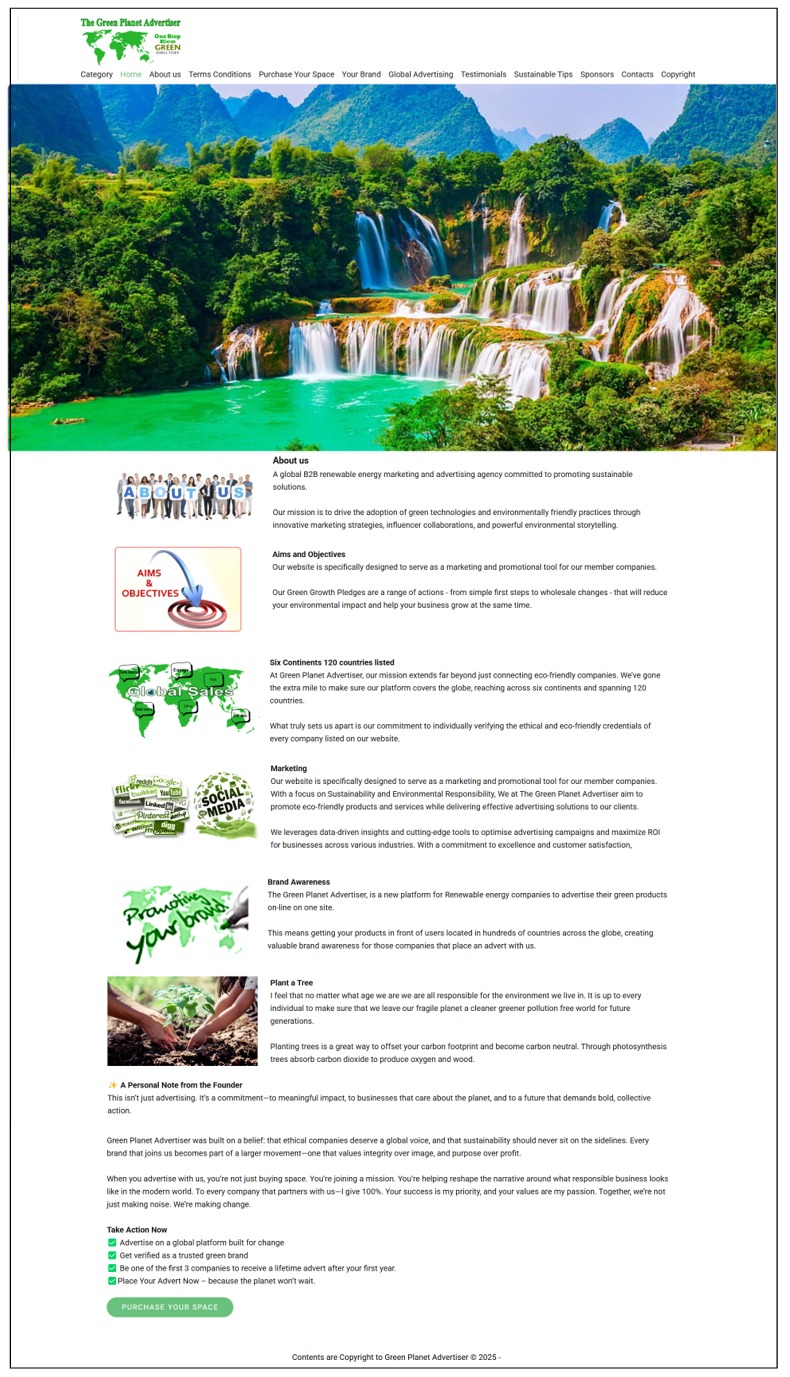
By 2013, I was ready to take on a new challenge. I set out to create a green, eco-friendly website—one that would not only push my limits but also give me a sense of purpose. I called it Green Planet Advertiser. This was more than just a project; it was my way of reclaiming my life and channelling my struggles into something meaningful.
The journey was anything but easy. The road was long, and the workload was immense. I had to find a company that allowed me to download web pages directly to my computer, then take on every aspect of the process myself—building and refining the pages, securing a domain name and hosting, mastering a new language for SEO optimisation, and crafting a global marketing strategy. It was the biggest challenge of my life, but I embraced it fully.
By 2017, I had overcome the worst. While short-term memory loss remained a lingering effect, I had regained control of my future. More importantly, I had built something that would make a lasting impact. Green Planet Advertiser was more than a website—it was a testament to resilience, innovation, and my unwavering commitment to a sustainable future.
Chapter 11: Full Circle
Years passed, and with each passing day, my health continued to improve. The memories of my ordeal—the pain, the uncertainty, and the struggle—became less vivid, though they would always be a part of me. But in their place grew something even more powerful: gratitude. I had been given a second chance at life, a chance to make a difference, to leave a legacy.
Looking back, I often find myself in awe of the journey I’ve taken. From the terrifying moment I was lying unconscious in that hospital bed in Thailand to standing on the global stage with Green Planet Advertiser, it’s been a journey of unexpected twists and turns. But through it all, one thing has remained constant: my commitment to sustainability and my belief that we each have the power to change the world.
Today, Green Planet Advertiser continues to grow, connecting companies and individuals who are dedicated to creating a greener, more sustainable future. And as I watch this community expand, I know that the real work is just beginning. The world needs more people who are willing to take risks, to challenge the status quo, and to embrace change. My story is just one of many, but it serves as a reminder that even in the face of adversity, there is always a chance for redemption, growth, and transformation.
In the end, I’m not just the man who survived a life-threatening illness. I’m the man who used that second chance to build something that will outlast me, something that will help shape the future for generations to come.
And as I sit back and reflect on this journey—from the abyss to the heights of accomplishment—I am reminded that no matter how dark the road may seem, there is always light on the other side. The key is to keep moving forward, no matter what. Because sometimes, the greatest adventures are the ones we never expected.
Conclusion
My journey has been one of unexpected twists, overwhelming challenges, and profound transformation. What began as a simple chapter of retirement, filled with the freedom to explore, turned into a life-altering experience that forever reshaped me. From the terrifying moment of the stroke to the slow but steady recovery that followed, each step has been a reminder of how fragile and precious life truly is.
Through determination, patience, and the support of my loved ones, I rebuilt my life—learning not just to walk and talk again, but to rediscover my strength, resilience, and purpose. Solitaire, of all things, became my therapy, helping me regain the cognitive abilities I thought I had lost. The simple act of playing a game became a metaphor for my recovery—one small victory at a time, ultimately leading to a grand triumph.
As I look back on the days spent in Bangkok Hospital, the life-threatening surgery, the uncertainty, and the long road to recovery, I now realize that each moment was part of a greater journey—one that led me to a renewed sense of purpose and the creation of Green Planet Advertiser. This project represents more than just a professional venture; it is a manifestation of the resilience I found within myself after facing the darkest moments of my life.
Life will always present challenges, and the road to recovery is never easy. But I am living proof that, no matter how insurmountable the obstacles may seem, there is always hope. The lessons I learned—about perseverance, gratitude, and the power of second chances—will stay with me forever. I have emerged from the abyss not only stronger but with a renewed sense of purpose, ready to face whatever the future holds.
The journey isn’t over, but I’ve already come so far. With Green Planet Advertiser, I have the opportunity to inspire others and contribute to the global movement toward sustainability. It’s a new chapter, one that I approach with the same determination and hope that carried me through the darkest days. The best is yet to come.
The Journey Continues
Footnote:
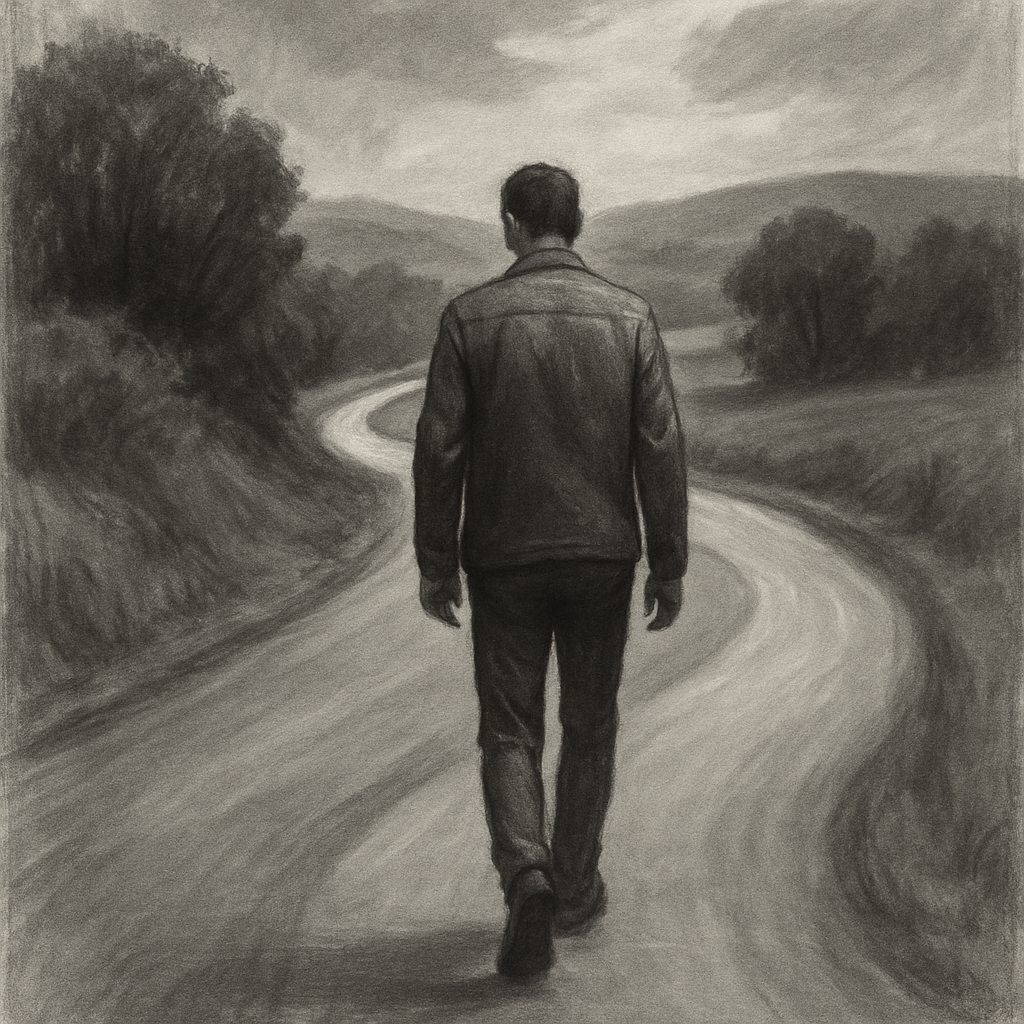
The road has been long and hard—shaped
by sacrifice, determination, and an unshakable belief in a better world. What
began as one man’s journey has grown into a global movement for sustainability,
reaching across borders and touching lives? Yet this is not the end.
The journey continues—with
every story shared, every step taken, and every voice raised for the planet we
call home.
The path ahead is still
unfolding, and together, we walk it—towards hope, towards change, towards a
greener future.