
A Garden's Seasonal Crop Rotation
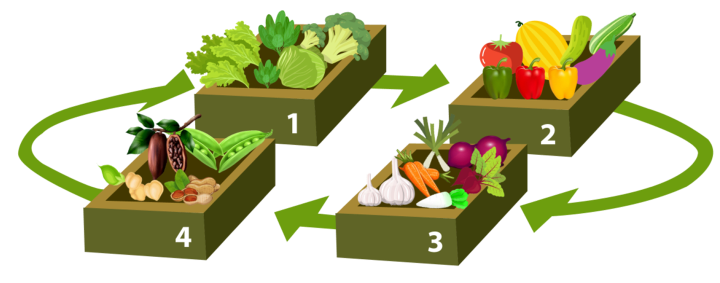
1. Leaves: Thrives on nitrogen. Example includes lettuce, spinach, broccoli, cabbage etc.
2. Fruits: Thrives on phosphorous. Example includes squashes, cucumbers, melons, tomatoes, peppers, and eggplants.
3. Roots: Thrives on potassium. Example includes onions, leeks, garlic, carrots, beets, radishes.
4. Legumes: Legumes are excellent for the Soil because they store nitrogen from the air and release it into the soil. Example includes beans, peas.
Crop Rotation
Is a farming practice that involves growing different crops in the same area over a sequence of seasons or years. This systematic rotation of crops helps to improve soil fertility, reduce the risk of pests and diseases, and enhance overall crop yield.
Organic farming
Organic farming and food production is not easy and takes real commitment and attention to detail, and is backed up by rigorous, independent inspection and certification
In the face of climate change, rising diet-related ill-health and widespread declines in our wildlife, the need to produce healthy food, cut greenhouse gas emissions, and protect wildlife grows more acute by the year. There is no magic bullet to tackle the challenges that face us, but the buying decisions we make every day are a simple but powerful form of direct action.
Why choose organic?
Crop rotation is a systematic approach to deciding which crop to plant where in your vegetable garden from one year to the next. Crop rotation is very important to organic farmers who grow crops on a large scale and of varying importance to home gardeners.
There are general principles of crop rotation that can help you make these decisions, but in the end, each farmer and gardener devises a unique crop rotation plan depending on which crops they grow and in what amounts. The goals of crop rotation are to help manage soil fertility and also to help avoid or reduce problems with soilborn diseases and some soil-dwelling insects, such as corn rootworms.Balancing soil fertility
Different crops have different nutrient requirements and affect soil balance differently. Some, like corn and tomatoes, are heavy feeders that quickly deplete soil nitrogen and phosphorus. Thus, if you plant corn in the same spot year after year, that plot of soil will run low on nitrogen and phosphorus more quickly than other parts of your garden will. By changing the location of corn each year, you'll be able to renew the plot where it grew the preceding year, so your soil won't get out of balance.
There are other crops that also use up nitrogen rapidly. They tend to be the leafy and fruiting crops, such as lettuce, cabbage, and tomatoes. In contrast, root vegetables and herbs are light feeders. Peas, beans, and other legumes add nitrogen to the soil but need lots of phosphorus.
The general rule of thumb for balancing out soil nutrients is to avoid planting the same general category of crop (root, legume, and leafy/fruiting) successively in the same place. It's best to follow nitrogen-fixing legumes such as peas or beans with nitrogen-loving leaf or fruiting crops such as lettuce or tomatoes. Then, follow the heavy feeding crops with light-feeding root crops.
Disease and pest prevention
If you have a large home garden, you may want to plan your crop rotation on the basis of plant families rather than on nutrient needs. This can help in your overall program of avoiding diseases and pests, because crops in the same botanical family tend to suffer from the same pest and disease problems.
For example, Colorado potato beetles like to eat potato plants, but they also enjoy feasting on tomato leaves and eggplant foliage. Since these beetles over winter in the soil, if you plant eggplant in a spot where you grew potatoes the year before, you could be inviting a beetle problem for your eggplants from the day they're planted. Likewise, several serious bacterial and fungal diseases over winter in plant debris in the soil.
Lengthy rotations are sometimes necessary to control chronic soilborne problems. Bean anthracnose fungus can persist in soil for up to three years, so a four-year rotation is needed to keep the disease at bay. The same holds true for such fungal diseases as Fusarium wilt and Verticillium wilt. A few problems, such as club root, persist in the soil for even longer, so rotation is less useful for controlling them.
Choosing your crop rotation plan
If you have a small garden, you may not be able to set up an effective rotation by crop family. That's also true if you grow only a few kinds of crops. In that case, stick to a basic soil-balancing rotation. But if you have a large plot and grow many different crops, you may enjoy the challenge of setting up a rotation by crop family. Refer to the chart on the previous page to learn which crops belong to the same family.
Keep in mind that cover crops can be included in a rotation plan to discourage specific types of pests and to improve soil. For example, beetle grubs thrive among most vegetables, but not in soil planted in buckwheat or clover. A season of either crop can greatly reduce grub populations and at the same time will increase soil organic matter content.
Rotating Vegetable Families
Susceptibility to pests and diseases runs in plant families. Leave at least two, and preferably three or more, years between the times you plant members of the same crop family in an area of your garden. When planning a rotation scheme, refer to this rundown of the seven family groups most often planted in vegetable gardens along with ideas for rotating them.
Summary
Crop rotation is a method of organic pest-control which reduces the build-up of soil borne disease. Members of any given family should not be grown in the same spot for more than one year. Vegetables from different groups can share a plot if they require the same conditions. Perennial varieties and those from the miscellaneous group need not feature in a rotation plan
Join us at Green Planet Advertiser, and let's pave the way for a sustainable future together. Whether you're a vendor looking to expand your global reach or a consumer seeking the latest renewable energy innovations, our platform is your gateway to a greener, cleaner, and more sustainable world. Together, we'll create a brighter tomorrow powered by renewable energy.